Something slightly off topic from my usual posts, but still loosely aligned with it.
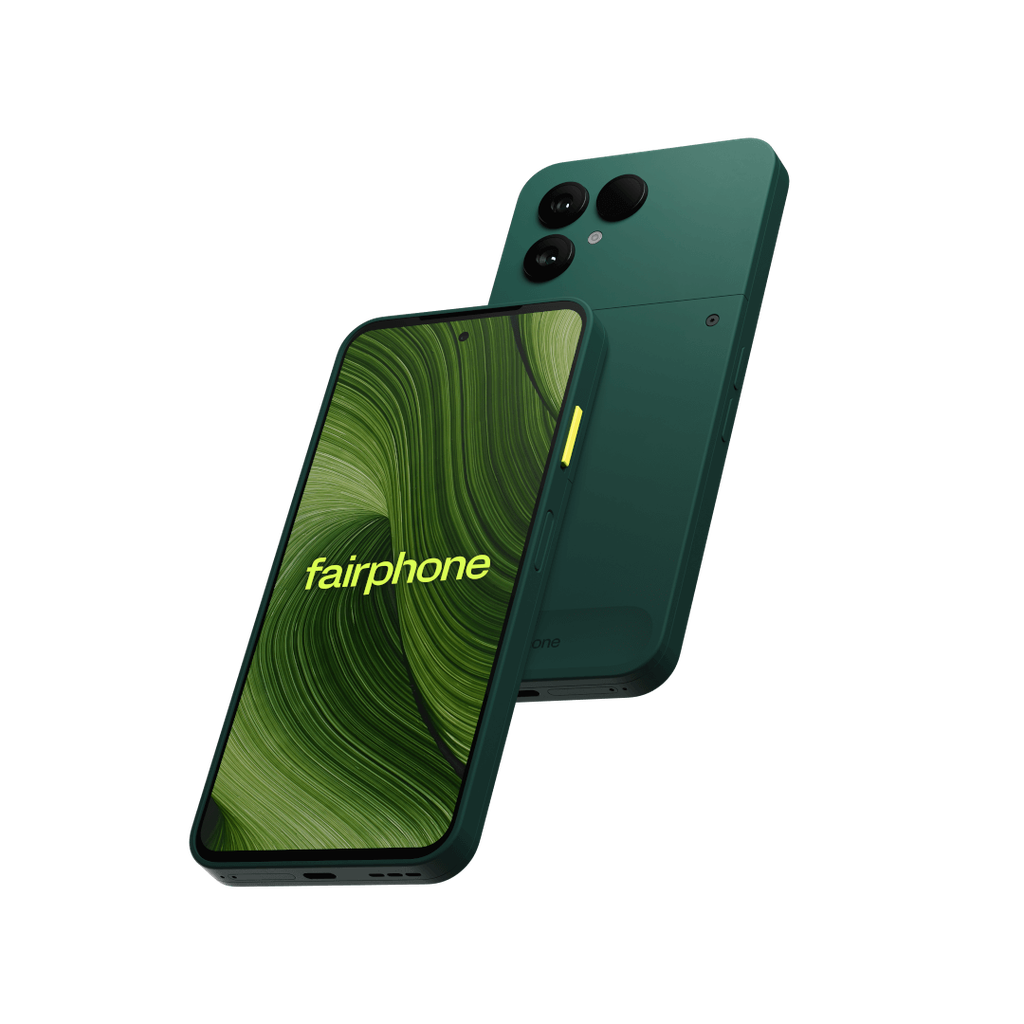
I have just purchased a Fairphone. That will not surprise those who know that my personal approach to technology leans heavily towards FOSS and self hosted solutions.
Both professionally and personally, I am always interested in new technology, but even more so when it challenges dominant technology models and players. When that challenge focuses on ethics, supply chain transparency, right to repair and long term support, I am particularly interested. That is exactly what Fairphone is attempting.
Fairphone is trying to fundamentally challenge how smartphones are designed, manufactured and supported. Instead of competing purely on performance or annual upgrade cycles, the company focuses on ethical supply chains, fairer sourcing of raw materials, improved labour conditions, repairability and long term software support. Its modular hardware design allows users to replace components such as the battery, camera and screen themselves, extending device lifespan and reducing electronic waste. In essence, Fairphone is attempting to prove that commercially viable consumer technology can be built without sacrificing environmental responsibility, supply chain transparency or user ownership in the process.
The Phone
So far, I have been genuinely impressed.
Within the first 24 hours I had already stripped it down and the good news is that it is so straightforward even I could do it. The modular design is refreshingly practical. The only reason I tend to replace my personal phone is because the USB C port eventually becomes unusable. What really stood out when stripping this down is that you can even replace the USB C port. It is a shame there is no headphone jack, although it was great to see a micro SD card slot supporting up to 2TB cards.
The only thing that might stop me using this as my primary personal phone for now is the camera. It is fine, but not exceptional. However, for my thousands of pictures of wall jack numbers, network racks and device serial numbers, it is more than adequate, so it certainly has potential as a business phone.
Where might work as a personal phone is for kids that are getting their first smart phones but are likely to smash and break it. No more massive bills to repair the cracked screen give them a replacement screen (that seems fairly priced) and a screw driver and call it a STEM lesson. There also seems to be some strong parental controls that I am going to touch on in the OS section…
The OS
I decided to be fairly radical and ordered it with /e/OS from Murena. Early impressions are very positive. It is a privacy focused, de Googled Android experience that just seems to work.
It is not that there is no Google at all. The OS includes microG, which provides the Google service features that many apps expect, allowing them to function without the official Google software installed and limiting Google’s direct involvement on the device. I was pleasantly surprised that several apps often known to be problematic on de Googled phones, such as banking apps, appear to work without issue. Funny enough I wont be listing which ones I have tested!
From a security and threat modelling perspective, it is a fascinating OS. I have been surprised to find that apps I previously considered relatively ethical and non tracking have a significant amount of traffic being blocked by the phone. This is very easy to see and interpret via the privacy dashboard. Needless to say, the LinkedIn app has had quite a bit blocked!
I’ve not played with it too much yet but scanning over the device is looks like there is well considered parental controls. You give it the child’s age range and then it gives suggestions on things like screen time and app access but then lets you customise it as you see fit.
Another nice feature is the ability to mask your location or IP address for specific apps. Of course, you want your mapping app to know where you really are, but that annoying app that insists on knowing your location can instead be given a random but plausible one. I haven’t fully explored it yet, but it looks like you can even make certain apps have public IPs that are based in different countries. This seems to use the Tor Project network, so your mileage may vary. With VPN apps being some of the most downloaded in the UK lately, this could be an interesting feature for some. It might also come in handy if restrictions on VPNs were ever introduced, though whether that would actually work or make sense is a whole other conversation.
Closing Thoughts
Let us be clear. These are not flagship specification devices chasing benchmark scores, although they do appear to be moving in that direction. When you consider what Fairphone has achieved within the constraints of operating ethically, sustainably and transparently, it is genuinely impressive.
A few members of the team, who are very fond of our current phone provider, are getting slightly nervous. I genuinely do not think they need to be.
I will be testing it from both a business and personal perspective over the coming months. One area I am particularly interested in is Murena’s MDM offering, and I have signed up to the beta programme. I am not entirely sure how formal it is, but I have not signed an NDA, so I assume it is acceptable to mention. The team at Murena have also said they are working on modules for Microsoft Intune, which will certainly be interesting to explore.
If there is interest, I will share updates as I go.